Wednesday, August 25, 2010

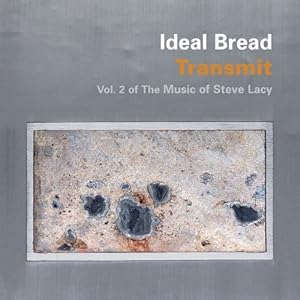
Staff Picks: Ideal Bread - Transmit: Vol. 2 of The Music of Steve Lacy

All week, we'll be posting reviews of 10 new CDs just added to the AccuJazz Staff Picks channel. You can keep tabs on all the reviews as they come out here.

5) Ideal Bread - Transmit: Vol. 2 of the Music of Steve Lacy (Cuneiform)

The first thing I noticed about Ideal Bread was their unconventional instrumentation: trumpet, baritone sax, bass and drums. For you, the line-up might bring to mind the famous Chet Baker/Gerry Mulligan "pianoless quartet" from the early '50s. For me, it also brings to mind my band. So, naturally, I was excited to hear what this group of expert improvisers was going to do with those instruments. Once I started listening, I was beyond pleased.

The verbosely titled Transmit: Vol. 2 of the Music of Steve Lacy is a set of witty and grooving interpretations of compositions just now receiving a proper airing. Steve Lacy is widely considered one of the great soprano saxophonists and a leading architect of the jazz avant-garde, but damned if I can remember anyone ever playing one of his tunes on a gig. Ideal Bread saxophonist Josh Sinton (also a member of Darcy James Argue's Secret Society) studied with Lacy at New England Conservatory and took up the dissemination of Lacy's music as something of a cause upon moving to New York.

Personally, I wasn't familiar with any of the Lacy tunes on Transmit before hearing the album, but the band does a superb job of illuminating Lacy's unique compositional style. The tunes are remarkably logical. During the heads of certain pieces, like "Flakes," you can almost see the math playing out in front of you on a chalkboard, the simple melodic motif traveling around the band, building in intensity as a descending harmonic line provides counterpoint and forward motion, culminating in a perfectly timed unison statement just before the improvisation begins. The appeal of Ideal Bread is how they take these intensely logical, almost geometric tunes and use them as springboards for soul-searching improvisations that explore the nether regions of bop.

Trumpeter Kirk Knuffke is a killer improviser with a gorgeous sound that has been reaching a lot more ears since his recently joining the Matt Wilson Quartet (who played my favorite live jazz show this year, so far, at the Green Mill in April). Bassist Reuben Radding has a big, classic sound that is used most effectively for laying down foundational bass lines, and drummer Tomas Fujiwara moves lithely between tasteful swing and fluid, out-of-time explorations.

It must also be mentioned that the band has a sense of humor, most apparent on the track "The Dumps," during certain sections of which all four band members yell out, "The Dumps!" in all manner of silly voices before jumping right back into the quirky theme. It takes a special group of jazz musicians to be willing to engage in that type of out-of-the-box music-making, and that spirit is apparent throughout the disc, whether they're yelling with their voices or through their instruments.

Listen to the Staff Picks channel here

Tuesday, August 24, 2010

Staff Picks: Regina Carter - Reverse Thread

All week, we'll be posting reviews of 10 new CDs just added to the AccuJazz Staff Picks channel. You can keep tabs on all the reviews as they come out here.

4) Regina Carter - Reverse Thread (E1 Music)

Expectations were high for Reverse Thread, the culmination of years of study for Regina Carter, who was awarded the MacArthur foundation's much-coveted $500,000 "Genius Grant" in 2006. The leading jazz violinist of her generation, Carter has explored a lot of musical territory in her 16-year solo career, from classical to hip-hop, and, naturally, plenty of jazz-related territory in between. Reverse Thread is an elegant exercise in cross-genre line-blurring. To create her pliable hybrid genre, Carter delved into the music of Africa, the cradle of civilization and ultimate source of all American popular music forms.

Inspired by field recordings found in New York's World Music Institute, Carter layers ancient-sounding melodies over harmonies more typical of modern jazz. At various points throughout the album, the music is evocative of Argentinian tango ("Un Aguinaldo Pa Regina"), traditional African music ("Hiwumbe Awumba"), Appalachian fiddle tunes (parts of most every track), and reggae ("Juru Nani / God be With You"). Helping her navigate the broad stylistic territory is an impressive band including guitarist Adam Rogers, bassists Mamadou Ba and Chris Lightcap, accordionists Will Holshouser and Gary Versace, drummer Alvester Garnett and most notably, Kora artist Yacouba Sissoko. The arrangements are tailored to feature each player's voice clearly and effectively. I've gone back to Reverse Thread for many repeat listens and I plan on doing so for a good while.


Listen to the Staff Picks channel here

Staff Picks: Keith Jarrett and Charlie Haden - Jasmine

All week, we'll be posting reviews of 10 new CDs just added to the AccuJazz Staff Picks channel. You can keep tabs on all the reviews as they come out here.

3) Keith Jarrett and Charlie Haden - Jasmine (ECM)

The first chord of "For All We Know," the lead-off track from Keith Jarrett and Charlie Haden's sublime new album, Jasmine, sets the tone for the rest of the disc. It's a major triad, the simplest of chords, held out for an entire measure. It's Jarrett's way of establishing that he and his partner have nothing to prove. Throughout Jasmine's 8 tracks, the name of the game is spare beauty.

It's almost shocking how simple the playing is at times. For a good portion of the album, Haden sticks solely to playing the roots of the chords, forgoing any inkling to fill up the empty spaces with passing tones or clever lines. Many of his bass solos consist of little more than rhythmically running up and down major scales, but his playing is so honest and in-the-moment that it somehow sounds revolutionary.

For Jarrett's part, he delves deep into his romantic side on Jasmine, going so far as to dub it music for lovers in the liner notes. Needless to say, this is no Barry White album -- the music is romantic and lush in the best sense of the words. Jarrett's playing is passionate, but lower-key than his playing with his longstanding "Standards Trio". He, like Haden, keeps it simple and lyrical for the most part, except for on the uber-standard, "Body and Soul." On this most-played of all songbook tunes, Jarrett must feel a little more like he has something to prove, deconstructing and obscuring the melody to a much greater level than on any other track on Jasmine. All 8 tracks, save Joe Sample's "One Day I'll Fly Away," are classic songbook ballads that have aged well through decades of interpretation.

Jasmine should satisfy jazz lovers of any bent. While I'm the first to admit that I can be biased towards the young and cutting-edge in jazz, there's no denying the power of two veterans earnestly playing some of their favorite old songs.


Listen to the Staff Picks channel here

Monday, August 23, 2010

Staff Picks: Dr. Lonnie Smith - Spiral

All week, we'll be posting reviews of 10 new CDs just added to the AccuJazz Staff Picks channel. You can keep tabs on all the reviews as they come out here.

2) Dr. Lonnie Smith - Spiral (Palmetto)

Dr. Lonnie Smith has taken a place as one of the world's top jazz organists, and he's settled into a steady groove of releasing albums of such high quality as to merit such distinction. At the age of 68, Smith shows no sign of slowing his output or dumbing down his music, and Spiral is an eminently convincing case for the continued preeminence of the Doctor.

Spiral takes a wide view of soul jazz, an idiom of which Smith has become a figure head. From the impossibly funky boogaloo of the lead-off track, Jimmy Smith's "Mellow Mood," to the smoky, snail's pace swing of "Frame For the Blues," Smith and his band make a case for the diversity of the genre. Spiral isn't as eclectic as, say, Claudia Quintet's Royal Toast, but in a way, it's all the more impressive how much ground Smith and his trio mates cover while still staying within the realm of radio-friendly mainstream jazz. "I've Never Been in Love Before" is rendered as a classic swing tune, but it's the lone track on the disc of which that can be said.

Drummer Jamire Williams and guitarist Jonathan Kreisberg lay down an unconventional foundation for the standard "I Didn't Know What Time it Was," playing dark harmonies over a jittery Drum and Bass groove. The familiar tune takes on a whole new character. Harold Mabern's "Beehive" becomes an all-out rock-fusion jam, and Smith's R&B title track is more D'Angelo than DeFrancesco. At this point in his career, Smith could be forgiven for playing it safe, but the music on Spiral, like the album's name, isn't interested in the straight-and-narrow.


Listen to the Staff Picks channel here

Friday, August 20, 2010

Staff Picks: The Claudia Quintet - Royal Toast

All week, we'll be posting reviews of 10 new CDs just added to the AccuJazz Staff Picks channel. You can keep tabs on all the reviews as they come out here.

1) Claudia Quintet - Royal Toast (Cuneiform)

There is so much compositional, textural, and improvisational depth in Claudia Quintet's new album, Royal Toast, that I don't really know how to do it justice with words. But as your fearless AccuJazz program director, I'm going to do my darndest to try.

The Claudia Quintet is a longstanding group of top-flight New York improvisers led by drummer John Hollenbeck, also the group's sole composer. His singular compositional style reaches levels of sophistication that are truly unique in the world of jazz. Rounding out the Quintet is accordionist Ted Reichman, saxophonist and clarinetist Chris Speed, bassist Drew Gress, and vibraphonist Matt Moran. On Royal Toast, pianist Gary Versace joins the group to make it a sextet.

The group's music is often dubbed "post-jazz," or in Hollenbeck's words, "party music for smart people." It's what happens when a deft composer melds jazz, avant-garde improvisation, contemporary classical, "world" rhythms, prog rock, and a little bit of everything else into one glorious new style that sounds like nothing but itself.

Naturally, with such a broad range of influences, the music contained on Royal Toast spans many moods and sonic landscapes. The record starts off unassumingly, with "Crane Merit," a slow-burning ensemble piece that incorporates Reichian minimalist techniques so seamlessly you don't even realize the depth of what you're hearing until the 8th or 9th listen. Unless you're smarter than I am. Maybe then you get it quicker.

After a brief drum solo, one of many solo interludes by different band members throughout the album, the Quintet offers up "Keramag" as possibly its most ambitious statement. It's 8 minutes of ingenious motivic development complimented by inspired solos and richly layered ensemble parts. 9 times out of 10, the tune's heart-stopping climax has me going back and listening to the entire song again.

From the abstract, overdubbed "duets" of "Ted Versus Ted," "Matt on Matt," "Drew with Drew," and "Chris and Chris," to the rhythmic puzzles of "Armitage Shanks," the remainder of the album covers a lot of ground and is engaging to the very end. It's safe to predict that Royal Toast will have a significant impact on a generation of jazz composers, with musicians and fans alike hipping each other to Hollenbeck's multifaceted compositions for some time to come.


Listen to the Staff Picks Channel here

Staff Picks, Volume 2

I sincerely hope you all have enjoyed listening to AccuJazz's Staff Picks channel over the past few months (for those of you unsure of what I'm talking about, read all about it here). I hope you enjoyed it so much, in fact, that you've been waiting in eager anticipation of the channel's next installment. With many thanks for your patience, I'm happy to present to you 10 new CDs now playing on the Staff Picks channel.

Instead of writing up all 10 CDs in one super-long blog post, as I did last time, I'm going to offer a series of shorter posts detailing my choices. This post right here will act as a "hub" for all the reviews as I post them. All the new additions come from our most recent music update, which you can read about here.


Wednesday, July 21, 2010

Now Playing on AccuJazz - 7/21/10


It's that time again. Time to update you loyal listeners on the ever-expanding pile of new music playing on AccuJazz's many channels. Here, in all its sprawling glory, is all the new music added since our last update. As always, the CD title is a link to purchase the album. Below the album info you'll see which AccuJazz channels are playing the album. My personal favs are adorned with the much-coveted double star (**).

**Regina Carter - Reverse Thread (E1 Music)**
New School, Cutting Edge, Modern Mainstream, Women of Jazz

**Fred Hersch Trio - Whirl (Palmetto)**
Straight Ahead, Piano, New School, Modern Mainstream, New York, Mellow

**Dr. Lonnie Smith - Spiral (Palmetto)**
New School, Modern Mainstream, Organ, Groove Jazz

**Keith Jarrett and Charlie Haden - Jasmine (ECM)**
Piano, Modern Mainstream, Bassists, Mellow, ECM

Geri Allen and Timeline - Live (Motema Music)
Piano, New School, Modern Mainstream, Live, Women of Jazz

Yotam - Resonance (Jazz Legacy Productions)
Straight Ahead, Guitar, New School, Modern Mainstream, Emerging Voices, New York

**The Claudia Quintet - Royal Toast (Cuneiform)**
New School, Cutting Edge, New York, Drummers

Steve Davis - Images (Positone)
New School, Modern Mainstream, New York, Trombone

Art Pepper - Unreleased Art Volume V (Widow's Taste)
Straight Ahead, Saxophone, Everybody's Boppin', Live, '80s

**Ideal Bread - Transmit: Vol. 2 - The Music of Steve Lacy (Cuneiform)**
New School, New York, Avant-Garde, Trumpet

**Julian Waterfall Pollack - Infinite Playground (Junebeat)**
Piano, New School, Cutting Edge, Modern Mainstream, Emerging Voices, Modern West Coast, Mellow

One For All - Incorrigible (Jazz Legacy Productions)
Straight Ahead, Everybody's Boppin', New School, Modern Mainstream, New York

**Gregory Porter - Water (Motema)**
Vocals, Modern Mainstream, Emerging Voices, Mellow

Arturo Sandoval - A Time for Love (Concord)
Trumpet, Mellow, Third Stream

George Brooks Summit - Spirit and Spice (Earth Brother Music)
Saxophone, New School, Modern Mainstream, Fusion, Groove Jazz

Paul Carr - Straight Ahead Soul (PCJ Music)
Straight Ahead, Saxophone, Modern Mainstream

Hilario Duran Trio - Motion (ALMA)
Piano, Latin, New School, Modern Mainstream

Tord Gustavsen - Restored, Returned (ECM)
Piano, New School, Modern Mainstream, Europe, Mellow, ECM

Tomasz Stanko - Dark Eyes (ECM)
New School, Modern Mainstream, Europe, Trumpet ECM

Russ Kassoff - Bird Fly By (RHK Jazz)
Straight Ahead, Piano, Modern Mainstream, Mellow

Oleg Kireyev and Keith Javors - Rhyme and Reason (Inarhyme Records)
Saxophone, New School, Modern Mainstream

**Dave Chisholm - Radioactive (Self-Released)**
New School, Cutting Edge, Modern Mainstream, Emerging Voices, Big Band

Lee Ritenour - 6 String Theory (Concord)
Straight Ahead, Guitar, New School, Modern Mainstream, Modern West Coast, Fusion

Ralph Towner and Paolo Fresu - Chiaroscuro (ECM)
Guitar, New School, Modern Mainstream, Trumpet, ECM

**Mikrokolektyw - Revisit (Delmark)**
New School, Cutting Edge, Europe, Avant-Garde

Rich Corpolongo Trio - Get Happy (Delmark)
Straight Ahead, Saxophone, Everybody's Boppin', Chicago, Composers: Bird and Diz

Robin McKelle - Mess Around (E1)
Vocals, Women of Jazz

Tobias Preisig - Flowing Mood (Obliqsound)
New School, Modern Mainstream, Emerging Voices, Europe

**Dave Peck - Modern Romance (Let's Play Stella)**
Piano, Modern Mainstream, Live, Modern West Coast

The Waitiki 7 - New Sounds of Exotica (Pass Out)
New School, Modern Mainstream

Denny Zeitlin - Precipice (Sunnyside)
Piano, Live

**John Goldman's Quadrangle - Outside the Box (Self-Released)**
Saxophone, New School, Modern Mainstream, Chicago

Beegie Adair - Into Somethin' (Adair Music Group)
Straight Ahead, Piano, Women of Jazz

Ernesto Cervini - Little Black Bird (Anzic)
New School, Modern Mainstream, Emerging Voices, New York, Drummers

Five Play Jazz Quintet - Five Play Jazz Quintet (Auraline)
New School, Modern Mainstream, Modern West Coast

Frank Glover - Abacus (Owl Studios)
Saxophone, New School, Modern Mainstream, Third Stream

Jose James and Jef Neve - For All We Know (Verve)
Vocals, Emerging Voices, Mellow

Tom Graf - Graffiti (Borrowed Time Music)
Latin, New School, Modern Mainstream, Modern West Coast, Groove Jazz

Moutin Reunion Quartet - Soul Dancers (Plus Loin Music)
Saxophone, New School, Modern Mainstream, Europe, Bassists

**Sarah Manning - Dandelion Clock (Positone)**
Saxophone, New School, Modern Mainstream, Emerging Voices, Women of Jazz

Hugh O'Connor - For the First Time (True North)
Saxophone, Modern Mainstream, Mellow

**Roberto Occhipinti - A Bend in the River (Alma)**
New School, Modern Mainstream, Third Stream

**John Goldsby - The Innkeeper's Gun (Bass Lion)**
New School, Modern Mainstream, Europe, Bassists

Soft Machine - NDR Jazz Workshop (Cuneiform)
New School, Europe, Fusion, '70s

Bob Szajner - Live at the Montreux/Detroit International Jazz Fest (Cadence Jazz)
Straight Ahead, Piano, Live, '80s

Hardcoretet - Experiments in Vibe (Self-Released)
New School, Modern Mainstream, Modern West Coast, Fusion, Groove Jazz

Laurie Antonioli - American Dreams (Intrinsic Music)
Vocals, Modern Mainstream, Modern West Coast, Women of Jazz

David Pritchard - Metal Roads (Morphic Resonance Music)
Fusion

Sean Jelinek - Common Tones (Self-Released)
Chicago, New School, Modern Mainstream, Drummers

Jeff Antoniuk and the Jazz Update - Brotherhood (Atonal Licks Music)
Saxophone, New School, Modern Mainstream

Rita Edmond - A Glance at Destiny (T.O.T.I. Music)
Vocals, Women of Jazz

Friday, July 16, 2010

Honoring Bill and Fred


The jazz world lost two of its most distinctive artists this June. Bill Dixon and Fred Anderson were both uncompromising horn players who played important roles in the development of the jazz avant-garde in the '60s and enjoyed major career resurgences late in life. To celebrate Dixon and Anderson, we are featuring an extra-large dose of their music on the Avant-Garde channel, which listeners will find right at the top of AccuJazz.com.

Bill Dixon was a trumpet player who busied himself more with exploring sound through his horn than playing melodies or hitting changes. While his music is undeniably intellectual, his trumpet playing always betrayed deep emotion behind every note.

An active member of the New York avant-garde jazz scene in the '60s alongside bigger-name artists like Cecil Taylor and Archie Shepp, Dixon spent decades in relative obscurity teaching at Bennington college in Vermont and recording only sporadically. In the first decade of the 20th Century, however, Dixon's name started popping up on the jazz world's radar much more frequently. He released 3 albums in the last 3 years, all of which saw Dixon collaborating with much younger musicians.

My first exposure to Dixon was his appearance on Exploding Star Orchestra's 2008 CD. It was actually one of the first CDs I added to AccuJazz playlists after getting this job -- I started working here about a week after its release. I remember being floored by the otherworldly sounds Dixon coaxed from his horn. At that point in my musical education, I had literally never heard anything like it. I hope you're also floored by all of Dixon's music that we're playing on the Avant-Garde channel.

Fred Anderson, like Bill Dixon, came up during the avant-garde revolution of the '60s, and, also like Dixon, experienced that late-in-the-game spike in popularity. His story is quite different, though. While Dixon enjoyed the stability of an east-coast liberal arts university gig, Anderson led a blue-collar life in Chicago his whole life, supporting his family and his music by installing carpet and tending bar. From the '80s on, Anderson ran his own club, the still-standing Velvet Lounge. In his role as club proprietor, Anderson mentored scores of young musicians and provided a place to play for artists and groups that wouldn't fit in anywhere else.

As a saxophonist, Anderson played with a wholly individual tone that was somehow smooth and gruff at the same time. Citing Charlie Parker as his greatest influence, Anderson didn't play in the bebop style, instead choosing to express himself in a freely-improvised style that alluded to everything from bop to funk to African rhythms. Anderson was on the more melodic side of free jazz improvisers, exploring seemingly infinite avenues of melody rather than pushing at the sonic limits of his instrument, as many working in the world of free improvisation are wont to do. His music is truly visceral and undeniably beautiful.

I personally am extremely grateful for Anderson's dedication to running the Velvet: I have frequented the club's longstanding Sunday night jam sessions for years, and my band played our debut gig there in April. Fred presided all night, and even agreed to show up 2 hours early so we could sneak in a last-minute rehearsal before the gig. At the end of the night, after everyone had cleared out, it was just me and Fred left as I was packing up my drums. He told me a story about how Lester Young used to be a drummer, but decided to switch to sax when he got tired of missing opportunities to go home with girls because he was busy tearing down his drums. Clearly, he felt for me. He was always so kind and gracious, and never seemed outwardly phased by the daunting economic realities of running an avant-garde jazz club in a run-down neighborhood.

Thursday, June 3, 2010

A Brotherhood of Great Music


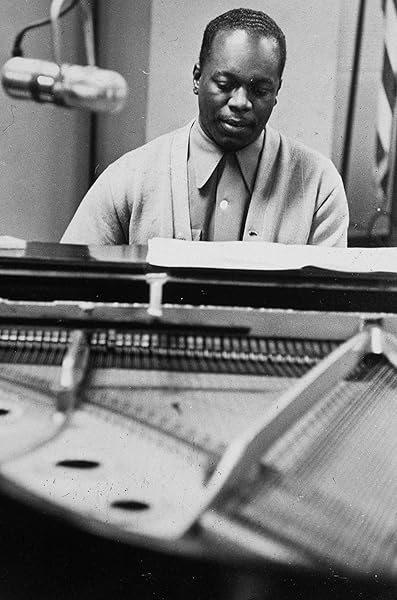
With the May 16 passing of Hank Jones (pictured), the last of the Jones brothers is gone. Pianist Hank, drummer Elvin and trumpeter/composer/arranger/bandleader Thad made up the greatest sibling set in the history of jazz, each one a titan on his instrument. I've been a fan of all three for some time, and can still remember my first encounters with each. I wanted to honor their legacy on AccuJazz, so I've created an entire channel devoted to their music, called "Keeping Up With the Joneses." We're also featuring an extra dose of the brothers on the AccuJazz main channel. Below, I offer some thoughts about each brother.

Hank:

Hank Jones played a lot of piano in his life. The start of his professional career predates Bebop, a style of which he became an undisputed master. He is known for his impeccable taste and distinctive, sensitive touch. While horn players are often easily distinguished by their tone, it's less common for a pianist to have such a recognizable sound; Hank Jones' touch is about as distinctive as it gets. Our channel is playing a handful of his albums from throughout his long career, from a great 1955 session to his 2007 duo CD release with Joe Lovano, Kids. The channel also features his sideman work with folks like Cannonball Adderley, Milt Jackson and Charlie Haden.

Elvin:

As some of you may know, I am a drummer. Elvin Jones is something of a god to my kind. His propulsive yet elastic time feel, uncanny facility with complex rhythms, and strong, emotional punctuations combined to create a style that has influenced every jazz drummer that came after him. Words can't really do justice to his playing. Just get the channel going and you'll hear what I'm talking about soon enough. His recorded output is basically the Rosetta Stone of modern jazz drumming. Our channel is playing some of his work as a leader, but you'll mostly hear him as a sideman, in his famous role as John Coltrane's drummer, as well as with other greats like Roland Kirk, Larry Young, Ornette Coleman and Joe Henderson.

Finally, Thad Jones. His reputation as jazz legend would have been secure for his trumpet skills alone, but two decades into his professional career he started writing a lot of music, eventually becaming known as one of the great jazz composer/arrangers. Our channel is playing a bit of his sideman work and a 1958 small-group session he led for Debut records, but Thad is mainly represented by the legendary big band he co-led with drummer Mel Lewis. Widely considered the greatest post-Basie big band, the Thad Jones-Mel Lewis Orchestra made the case that large-ensemble jazz is capable of more than novelty and nostalgia. Thad's original compositions and arrangements fit squarely in the big band tradition, but pushed at that tradition's boundaries ever so insistently, with unprecedented harmonic and rhythmic complexity and deft use of funk and rock influences. College big bands all over the world are still constantly challenged by Thad's timeless writing. The Thad Jones-Mel Lewis Orchestra collaboration with vocalist Joe Williams is an all-time favorite album of mine, so you'll be hearing a lot of Joe's pipes on the channel.


One more link the the channel: Keeping Up With the Joneses.

Tuesday, May 4, 2010

Staff Picks


I've been running the show at AccuJazz for over 2 years now, so I figure it's high time to start exploiting my position and give special preference to my favorite music. I'll be doing this in the form of the exciting new "Staff Picks" channel. I stole the idea from the record stores, booksellers and libraries who allocate a section of their floorspace to their employees' favorite items. That's sort of what this channel will be like, but since I'm the only staff member, I'll be exercising unchecked authoritarian control over the selections.

The plan is to have 15 of my favorite new releases playing at a time. Each time I update the playlist, I'll write a blog post explaining the thought behind my selections. I'll most likely accompany each new "Now Playing" blog post with some additions to the channel.

Before you start reading about the music, you'll probably want to launch the channel, won't you?

1) Brad Mehldau - Highway Rider (Nonesuch)

As far as I'm concerned, Mehldau can do no wrong. And with Highway Rider, he really really did right. I wasn't blown away on the first listen, but I've grown to fall deeply in love with this music, all 103 minutes of it. 2 discs of gorgeous original compositions, played by various combinations of musicians including his longstanding trio, saxophonist Joshua Redman, and a great big orchestra (including a bad-ass contrabassoon used to great effect).

2) Paul Motian / Chris Potter / Jason Moran - Lost in a Dream (ECM)

Recorded live at the Village Vanguard, the same place where drummer Motian made some of the most influential recordings in jazz history in 1961, this disc is a beautiful statement by a cross-generational group of jazz masters. The music floats along at a curious pace, not quite grooving, but not exactly "free" either. The feel can only be described as "Motian time." The drummer's haunting original compositions comprise most of the selections, with Irving Berlin's "Be Careful It's My Heart" being the lone standard. Props to Potter and Moran for not flexing their considerable chops muscles on this mostly somber date.

3) Jazz at Lincoln Center Orchestra - Portrait in Seven Shades (Jazz at Lincoln Center)

While many view JALC as the jazz world's version of "The Man", an overbearing establishment force that hogs funding and attention from the rest of the struggling jazz community, one has to admit that their resident orchestra does make some fine music. I'm impressed with Portrait in Seven Shades, a 7-song suite composed by JALC saxophonist Ted Nash in homage to 7 great painters, ranging from Monet to Pollock. Nash makes a strong case for his programmatic music, summoning a world of colors and textures from the orchestra. Picasso's movement tastefully incorporates Spanish flamenco rhythms and Matisse is represented by playful swing. An artist friend of mine concurred that Nash did a splendid job of matching sounds to the glorious sights found in these painters' work.

4) Stephan Crump with Rosetta Trio - Reclamation (Sunnyside)

Before this CD came along, I only knew Stephan Crump as the bassist in Vijay Iyer's excellent groups. Little did I know that he has released four albums under his own name. On his most recent, Reclamation, Crump makes a strong case for himself as a composer and bandleader worthy of greater recognition. Joining Crump in his Rosetta Trio is Liberty Ellman on acoustic guitar and Jamie Fox on electric guitar. The 9 original compositions on the CD show off an old school melodic sense, eminently singable, but never cliched. Songs like "Memphis" and "Shoes, Jump," almost have an early-jazz feel, with gorgeous melodies played by Ellman's acoustic guitar and group improvisation that sounds equal parts Dixieland and free jazz. Some other songs, notably "Silogism" and "Overreach," almost sound like they could be covers of alt-rock songs. The stylistic diversity feels anything but unfocused, though.

5) Dave Holland Octet - Pathways (Dare2)


On his newest disc, Dave Holland continues his stay in the land beyond the quintet. 2008's "Pass It On" was his first non-quintet, non-big band release in over a decade. On Pathways, Holland seems to have found a happy medium between the small group and the big band, using his stable quintet as the core and adding two more saxes and a trumpet to make a sort of "little big band." The music is classic Holland, with funky-but-not-danceable bass grooves, hard-hitting drumming, and super-tight horn parts. The repertoire is made up of Holland originals old and new, and also makes room for his sidemen's compositions, including saxophonist Chris Potter's "Sea of Marmara" and trumpeter Alex Sipiagin's "Wind Dance." Recorded live at Birdland in January '09, there's a fiery energy to the performance that is sometimes lacking in Holland's polished studio dates.

6) Chicago Underground Duo - Boca Negra (Thrill Jockey)

This record is what happens when you take two musicians with seriously wide-ranging musical interests, put all sorts of implements in their hands (trumpet and drums, yes, but also flutes, laptops, mbira, and an array of synthesizers) and let their imaginations run wild. Boca Negra is a testament to the true worth of freedom in music. Trumpet player Rob Mazurek and drummer Chad Taylor have been collaborating in the Chicago Underground collective for over a decade now, and they're a long way from running out of new ideas. Boca Negra showcases everything from the acoustic free jazz of "Green Ants" to world-jazz/ambient vibe on "Left Hand of Darkness" and the dark funk of "Spy on the Floor." Makes me sad that they don't live in their eponymous city anymore.

7) Orrin Evans - Faith in Action (Positone)

I immediately had high hopes for this one when I saw that Nasheet Waits was behind the drums. Waits is one of my favorite drummers, and I feel a special connection to him because he once played a gig with Peter Brotzmann on my drums (my rock drum set, too -- long story). Faith in Action's first track, a quirky, rhythmically knotty Evans original called "Don't Call Me Wally," is a perfect vehicle for Waits' liberated drumming style and made me an instant fan of the album. I still consider the lead-off track to be the strongest on the album, but there are plenty of highlights along the way, with half of the album's compositional credit going to Evans' one-time mentor, alto saxophonist/composer Bobby Watson. Everybody involved in the session is on fire, including two guest drummers, Rocky Bryant and Gene Jackson, who each play on a track apiece.

8) Polar Bear - Peepers (Leaf)

Polar Bear is a genre-defying group of young London-based musicians led by drummer Sebastian Rochford, known for his drumming chops, imaginative compositions, and incredibly large hair. Polar Bear's music could be considered "post-jazz" along the lines of the Claudia Quintet, Kneebody and fellow Londoners Led Bib, but to my ears there's much more of a punk aesthetic at play here. Peepers' opener, "Happy for You," is full of harmonic and rhythmic twists and turns a la Claudia, but there's also a heavy dose of rock, with Leafcutter John's jangly, semi-distorted guitar providing the harmonic foundation. Other tunes reference African rhythms, surf rock and free jazz, but throughout it all the band maintains a singular sound that is all their own.

9) Lionel Loueke - Mwaliko (Blue Note)

Lionel Loueke seems to have taken a cue from his sometime employer Herbie Hancock, who has adopted the all-star, cameo-heavy approach to his albums as of late. On Mwaliko, Loueke's second disc for Blue Note, the guitarist pairs up with a handful of big-name duet partners and also offers some tracks with his excellent longstanding trio. Two tracks with famed vocalist (and fellow native of Benin) Angelique Kidjo are joyous anthems, simple on the surface, but embellished through empathetic collective improvisation. The two tracks with vocalist/bassist Richard Bona are not to my liking, more new-age than jazz or "world." Loueke's two duets with vocalist/bassist/it-girl Esperanza Spalding are impressive exercises in orchestration, using the two musicians' voices and instruments like a small orchestra. Loueke and drummer Marcus Gilmore improvise over Wayne Shorter's "Nefertiti," taking plenty of chances rhythmically, but never quite catching fire.

10) Little Women - Throat (AUM Fidelity)

To quote NPR's Patrick Jarenwattananon, "There are no women in Little Women, and their sound is not little." Tru dat. This is state-of-the-art avant-garde noise, often ruthlessly violent, occasionally beautiful. Comprised of saxophonists Travis Laplante and Darius Jones, guitarist Andrew Smiley and drummer Jason Nazary, Little Women have crafted a seven-part suite they call Throat. While the music sometimes sounds chaotic on the surface, there is high-minded concept behind every note, with improvisation often seamlessly leading to ensemble passages, saxophone duets that build to emotional climaxes, and all sorts of sounds that you never knew saxophones or guitars were capable of creating. Check out this post on the Destination Out blog, where you can listen to the first movement of the suite and read an articulate and informative self-penned explanation of the band's M.O.

11) Michael Musillami - Old Tea (Playscape)

Old Tea is Michael Musillami's dedication to the memory of his son Evan, who took his own life in March of 2009. The title comes from a highly treasured variety of tea that the guitarist hoped to share with his son but was never able to (Musillami and his son had a special bond over their love of fine tea). It's tough to not let the heartbreaking back story affect your perception of the music, and I'm OK with that. Music is many things to many people, but one of those things is heartfelt personal expression, and this music is indeed beautiful and expressive. Performed by his longstanding trio of Joe Fonda on bass and George Schuller on drums, the 11 compositions are intricately composed modern jazz that make room for adventurous and, of course, expressive improvisation.

12) Trombone Shorty - Backatown (Verve)

Generation Y jazz superstars like Aaron Parks and Christian Scott have crafted an appealing and distinct sound informed in part by a fusion of post-Wayne Shorter modern jazz and moody rock/pop by the likes of Radiohead and Portishead (pretty much, British groups ending in "head"). Trombone Shorty is another force in of-the-times jazz fusion, but the sources he's pulling from are entirely different: New Orleans brass band music and mainstream pop/rock. When Backatown steers more heavily towards the power-chord heavy rock end of the spectrum, I lose interest, but when he stays a little closer to his NOLA roots, I'm all ears. Tracks like "Hurricane Season" and "In the 6th" feature balls-out brass blowing over meticulously crafted beats that groove like mad. Can't argue with that.

13) Dan Weiss - Timshel (Sunnyside)

My first exposure to drummer Dan Weiss was in person, at a clinic he gave while I was a jazz student at Northern Illinois University. He came off as a very serious, dedicated, and possibly self-righteous person, so completely wrapped up in his art that it would make sense for him to be the last person on earth to find out who Justin Bieber is. Weiss' disciplined, academic approach to music runs the risk of registering as detachment, but that doesn't happen on Timshel. A huge step forward from his trio's first album, Now Yes When, the disc is full of epic chamber jazz that uses every tool at the composer's disposal to great emotional effect. Rhythmically, harmonically, formally and conceptually, Timshel is ambitious and successful. Every song goes for an aesthetic of heartbreaking beauty, layering melancholy melodies over dense, mysterious harmonies and a dissertation's worth of complex rhythms no doubt informed by Weiss' extensive study of Indian tabla. The discipline and hard work has clearly paid off.

14) Thomson Kneeland - Mazurka for a Modern Man (Weltscmerz Records)

I found out about New York-based bassist/composer Thomson Kneeland from the artist himself, who contacted me directly through email. Being a working musician myself, I tend to give sole proprietors like Kneeland the benefit of the doubt, almost always giving them the green light to send a CD but never expecting much. I was pleasantly surprised by Kneeland's Mazurka, an engaging album of modern jazz claiming to have influences including 20 Century Chamber composition, Indian Karnatic music, Balkan folk music and heavy metal among others. The music doesn't sound nearly as unfocused as that laundry list of influences would lead you to assume, though. Some of the tunes have a vibe reminiscent of the great music created by Kurt Rosenwinkel and Mark Turner, but Kneeland has definitely found his own voice as a composer, and his band does a fine job of amplifying that voice. It should be noted that Mazurka is also dedicated to a suicide victim, Take Toriyama, the drummer on the date and one of Kneeland's closest friends.

15) Dave King - Indelicate (Sunnyside)

Most of you probably know Dave King as the live wire behind the drum set in post-jazz superstars the Bad Plus. Less of you may know of my passionate love for the Bad Plus and anything any of their members are involved with. Naturally, I was extremely interested to hear King's debut solo album. It's a duo project between Dave the drummer and Dave the pianist (brought together through the magic of overdubbing). While some of the songs on Indelicate exhibit the same bright-eyed poppiness of King's contributions to TBP's oeuvre, a good portion of them are challenging studies of abstruse rhythms and near atonal melodies. It takes a lot of listens to start hearing the beauty in labyrinthine compositions like "Bees," but it's a worthwhile journey. My vote for best song on the album is "Arts High Boogie," which successfully fuses King's accessible melodicism with his love for the oddball and complex. Also: best cover art of the year, so far.